The five materials at a glance
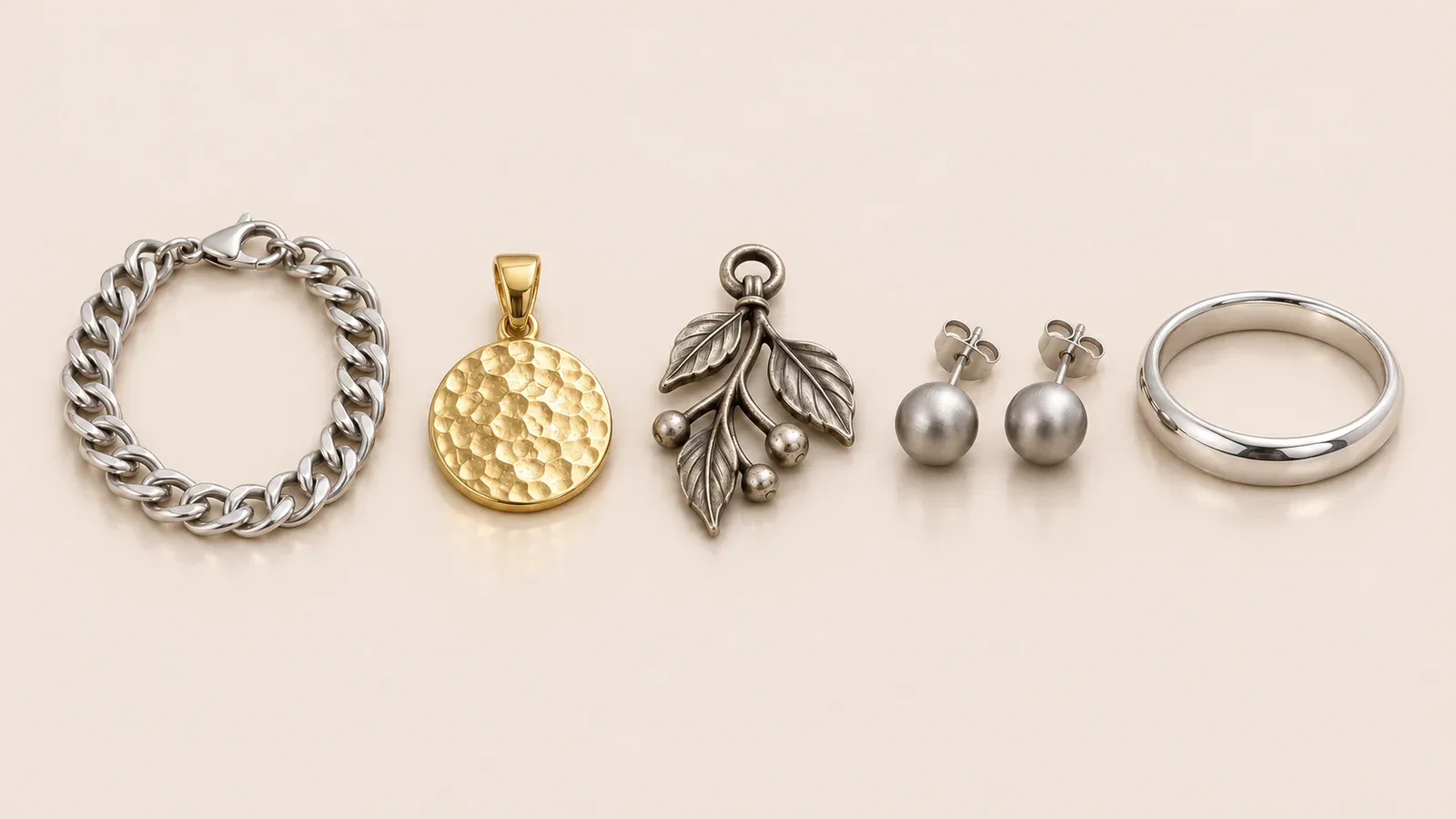
Five base materials (Stainless steel, Zinc alloy, Brass, Titanium, 925 silver) cover most fashion jewelry orders. Each one trades off weight, detail, upkeep and price in a different way, so the right choice depends on how the piece is worn and what your customers expect to pay.
| Material | Strengths | Best for | Price level |
|---|---|---|---|
| Stainless steel | Durable, keeps its shape, low upkeep | Everyday chains, huggies, rings | Entry |
| Zinc alloy | Casts fine detail at low cost | Statement and detailed designs | Entry |
| Brass | Warm base, takes detail and plating well | Textured, trend-led designs | Entry |
| Titanium | Very light and strong | Studs and lightweight earrings | Mid |
| 925 silver | Precious metal, bright polish | Fine-jewelry collections | Premium |
Colors are a separate decision from the metal. Gold, rose gold, silver and black tones come from a coating applied on top of the base, either electroplating or PVD, and which colors suit which material is worth confirming on the quote before you commit to a design.
Stainless steel: everyday wear
Stainless steel holds its shape, resists scratching better than the softer metals and needs little care, so it suits the pieces that are worn every day: chains, huggies and rings.
Its colors come from PVD coating, which bonds well to steel.
"Stainless steel" covers several grades, and the grade matters when a marketplace or a market asks for it by name. If your listing names a grade, put it in the quote request so it is confirmed in writing before production.
Brass and zinc alloy: detail at a lower cost
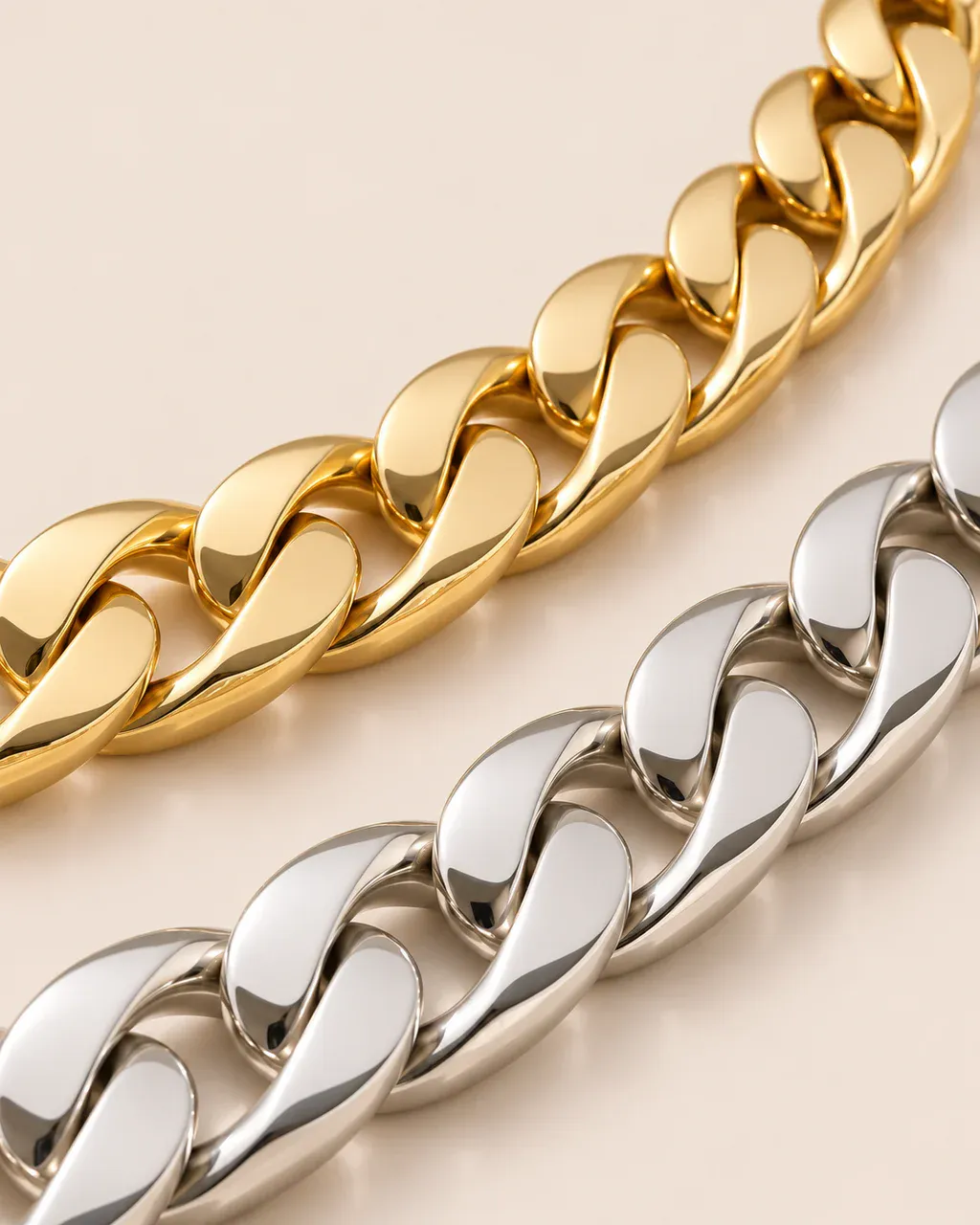
Both metals are cast, and both pick up fine detail, so they suit statement pieces, textured surfaces and shapes that would be slow or expensive to carve from solid metal. Brass gives a warm base that generally takes gold plating well, and it is the usual choice when a design needs relief, a pattern or a sculpted edge. Zinc alloy is the lowest-cost option for detailed cast pieces, which makes it a natural fit for trend-led collections where styles change often.
The trade-off is that neither metal carries its own color. A brass or zinc piece looks the way its plating looks, so the plating decides how long the piece stays attractive. Two quote questions protect you here:
What thickness of plating is on the piece, and is there a sealant over it?
How is the thickness checked? We check plating thickness on sample pieces with a thickness gauge during in-process inspection.
How plating thickness relates to color life is covered in PVD vs gold plating.
Titanium: light and strong
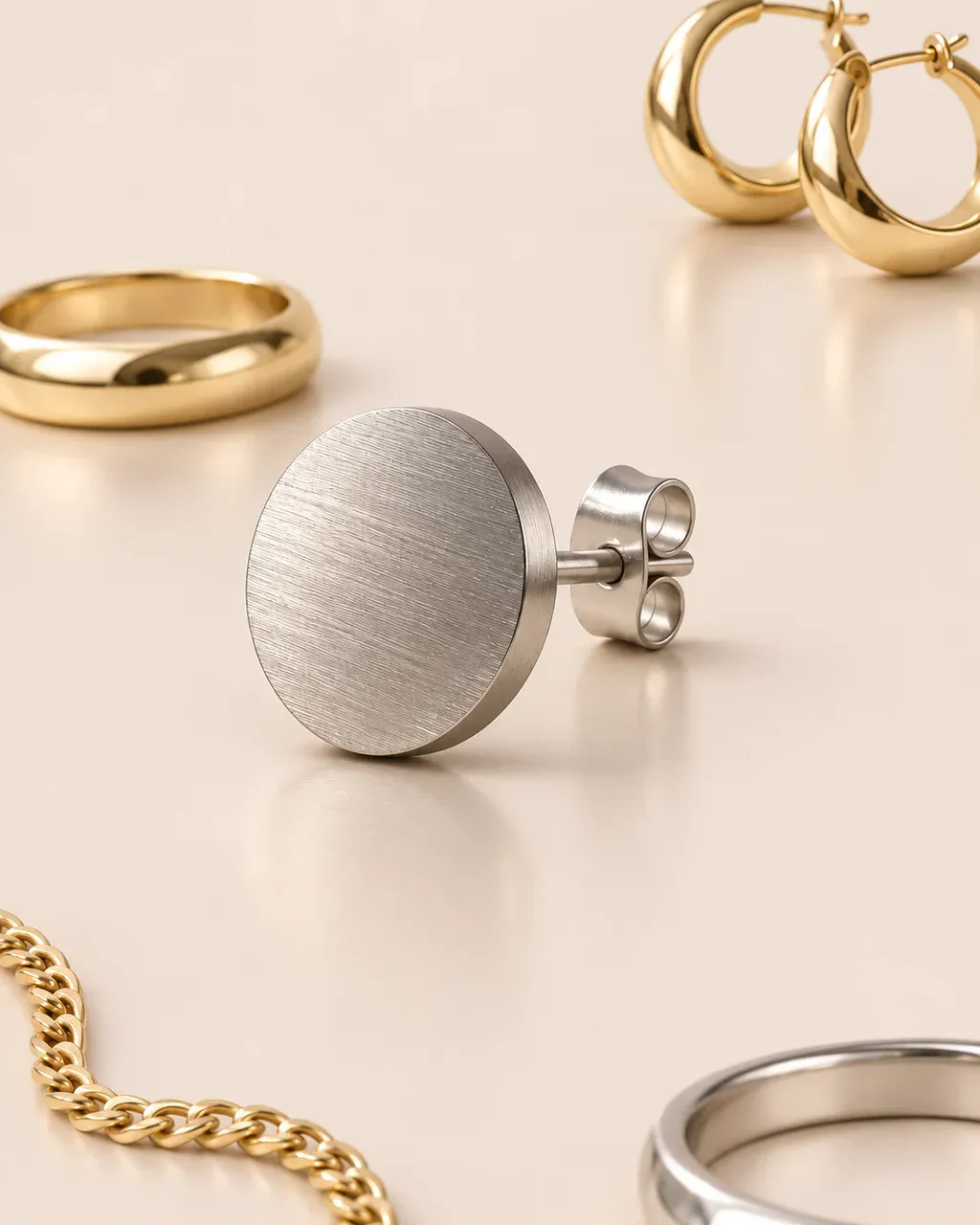
Titanium is the lightest of the five metals and very strong, which is why it shows up in studs and lightweight earrings. The metal can stay in its natural color or, as is common in the trade, take a PVD coating.
Posts and findings matter as much as the visible part of an earring. Ear posts are available in Titanium, Stainless steel, 925 silver. If you sell to customers who are particular about what touches the ear, name the post material in the product listing and in the quote request.
Weight is a design variable you can plan with. Earrings in our range run 2–8 g/pair, and necklaces 5–20 g/piece. A lighter metal lets you make a larger earring that still sits comfortably.
925 silver: the precious-metal option
925 silver has a bright polish and sits at the premium end of the range, for fine-jewelry collections and for buyers whose customers expect a precious metal. It can darken over time in air; a polishing cloth restores it. Gold electroplating on silver is generally possible when a collection calls for a gold look; ask the quote which colors are available for a given style.
Silver is also the material where the claim on the label matters most. A buyer who lists a piece as 925 silver should hold a way to back it up, so ask what testing is available for the fineness of the metal before you list.
How to choose
Start from the wearer and work back to the metal.
Worn daily: stainless steel or titanium.
Statement piece, fashion cycle, detailed shape: brass or zinc alloy, with a plating spec in the quote.
Lightweight earring: titanium, with the post material named in the listing.
Fine-jewelry positioning and a premium price: 925 silver.
Mixed collections are normal. A brand can run steel chains next to brass pendants and titanium studs, as long as each piece has its material and finish written on the quote. Ring sizes run 5–13 US size and chain lengths 44–66 cm.
Next step
Send the pieces you plan to make, the price point and the markets you sell in, and ask the quote to state the material and finish for each piece. The choice of metal is easier to change before a mold is made than after. Whichever metal you pick, ask for test reports that apply to your material and market.
See the pieces by material: stainless steel, brass, zinc alloy, titanium and 925 silver.