From idea to sample
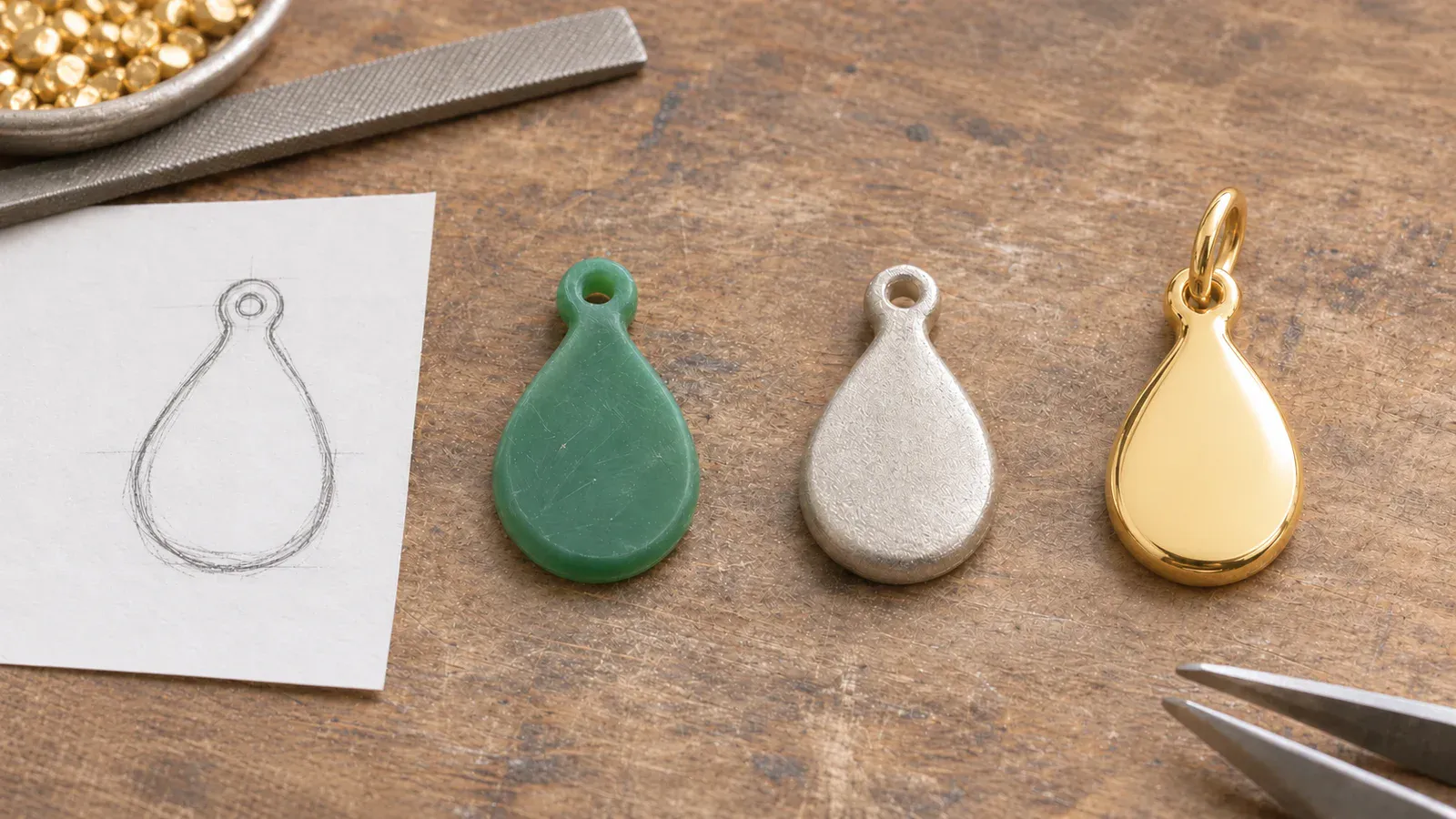
A custom charm moves through a fixed order: the reference, the 3D model, the mold or die, forming, decoration, finishing and the sample you approve. Each stage has its own thing to check, and you see the result at two points: the model and the sample. Knowing the order helps you send the right material at the start and avoid a redo late in the schedule.
Design references
A logo file, a sketch or a photo of a reference is enough to start. Our designers prepare 3D models, and we accept 3DM, STL, OBJ, STEP/IGES and 3MF files. Send design files in one ZIP archive on WhatsApp or by email.
Vector files (AI, PDF, SVG or EPS); a high-resolution PNG works for simple logos.
When the reference is a photo of something that already exists, tell us what to keep and what to change: the outline, the size, the surface texture, the colors. A logo on its own tells us the shape but not the depth, so say whether the charm should be flat, domed or sculpted.
CAD model approval
The model shows the charm at its real size. Check the details that matter at that scale: how thick the lines are, the size of the loop for the jump ring and the space left for engraving. The drawing is confirmed before the mold is carved.
This is the cheapest point to change anything. A change on screen is a few clicks; a change after the mold is cut is a new mold. Look at three things on the model: the outline against your logo, the thickness of thin features and the place of the ring or the clasp. If the charm will carry text, check the smallest letter and the thinnest line.
| Detail | Minimum |
|---|---|
| Smallest letter and line | Text from 0.8 mm high and lines from 0.1 mm wide on flat surfaces. |
Your quote confirms the minimum text size for your design.
Stamping and casting
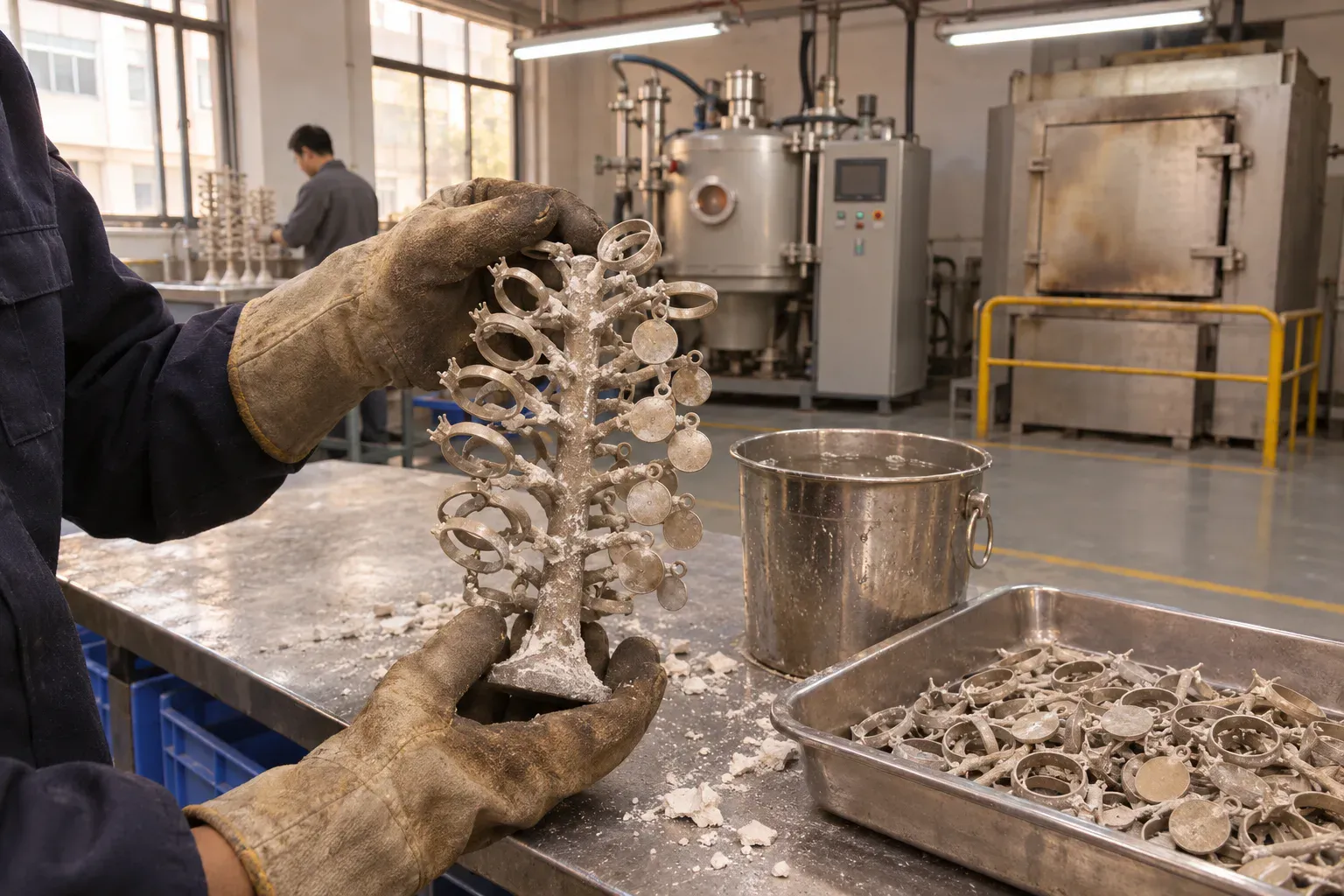
Flat charms with a clean outline, such as tags, initials and logo plates, are usually stamped from metal sheet with a steel die. Charms with depth, texture or fine detail are cast from a wax or resin master instead. Both start from the approved model, and the mold or die is used only for your design.
The choice between the two also sets the look of the piece. Stamping gives crisp edges and an even surface, and it repeats well across large runs. Casting holds relief, curves and undercuts that a press cannot form, so a three-dimensional animal or a sculpted symbol is a casting job.
Colors, stones and logos
We can engrave your logo on the back, make double-sided designs, add enamel colors or set cubic zirconia. Each option is quoted per design.
Send Pantone Solid Coated (C) codes; we mix each color and you approve it on a cured physical sample before bulk.
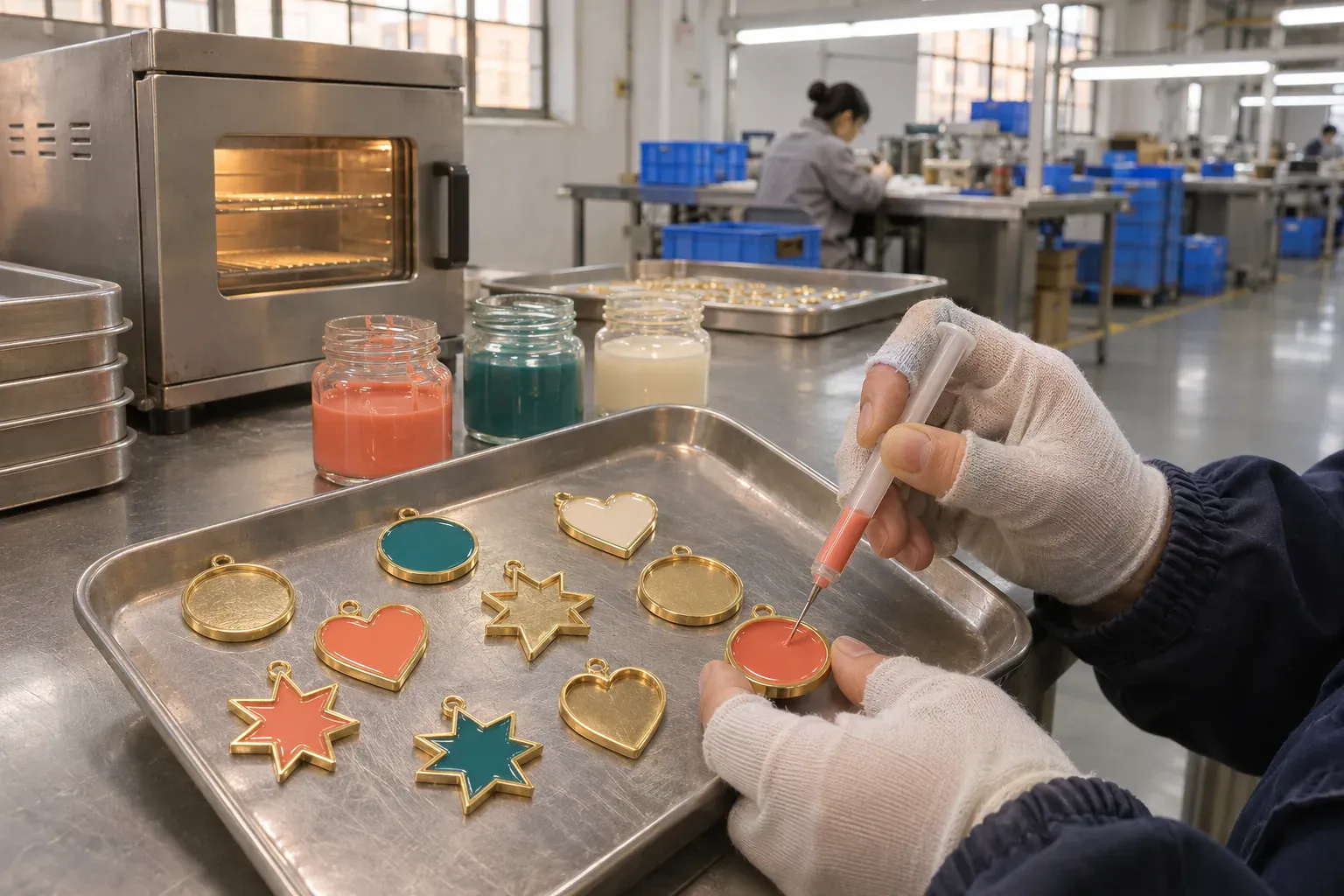
Color is added after the metal is formed. Enamel and epoxy colors are filled into recessed areas, so the design needs clear walls between colors. Stones are set into prepared seats. Micro-pavé and prong setting are both available. Engraving goes on the back or the face of the piece.
The practical rule for artwork: fewer colors and larger color areas are easier to fill cleanly, and the design limits for line and area size are worth asking for before you finalize the drawing. Send Pantone codes rather than a screenshot, because a screenshot looks different on every monitor.
Plating and finishing
After forming, charms are cleaned up and polished, then electroplated or PVD coated, depending on the base metal. Electroplating and PVD coating are both available. In the trade, brass, zinc alloy and 925 silver charms are usually electroplated and stainless steel charms usually take PVD; ask the quote which process applies to your design.
Pick the finish with the wearer in mind. A charm that sits on a bracelet rubs against other charms and the chain all day, so a harder finish and a polished, rounded edge last better than a thin coating on a sharp edge.
Timing, minimums and mold terms
A new design means a new charm mold, so the schedule has a development part before the bulk part. The mold stage sits inside the sample schedule below.
Mold fees depend on the type of mold. Wax molds cost approximately US$12–45 and steel molds approximately US$80–150. The fee covers 3D drawing, mold carving, mold materials, mold trials and sampling labor
The molds belong to us and are used only for your orders. We store them free for 1–2 years, and if you place no orders for a long time, we contact you first. For a fee, you can buy out your steel molds and we ship them to you. Wax molds are used up in production, so they cannot be bought out.
Samples of a new design take 12–25 working days: CAD 2–3 working days, mold 3–12 working days, sample 7–10 working days
Bulk production of custom charms takes 30 days after sample approval.
A new shape needs a minimum of 50 pieces per style.
Your quote confirms the timing and the minimum for your design.
Revisions to the drawing after approval extend the schedule, so confirm the model before the mold is cut. Plan your launch date from the end of the sample stage, and build in a round of feedback on the sample before you approve bulk.
Next step
Send your logo or sketch, the size you have in mind and the colors you want. Ask the quote to state stamping or casting, the mold terms and the sample schedule. The custom charms page shows the styles and the attachments available, casting and forming covers the processes, and OEM covers designs of your own.