Two finishes, two different processes
Jewelry color rarely comes from the metal underneath. It comes from a thin layer on top, and there are two common ways to put that layer on: electroplating and PVD. The processes are different, they suit different base metals and they age differently, so the choice affects what your customers see after a few months of wear. Electroplating and PVD coating are both available.
How each finish is applied
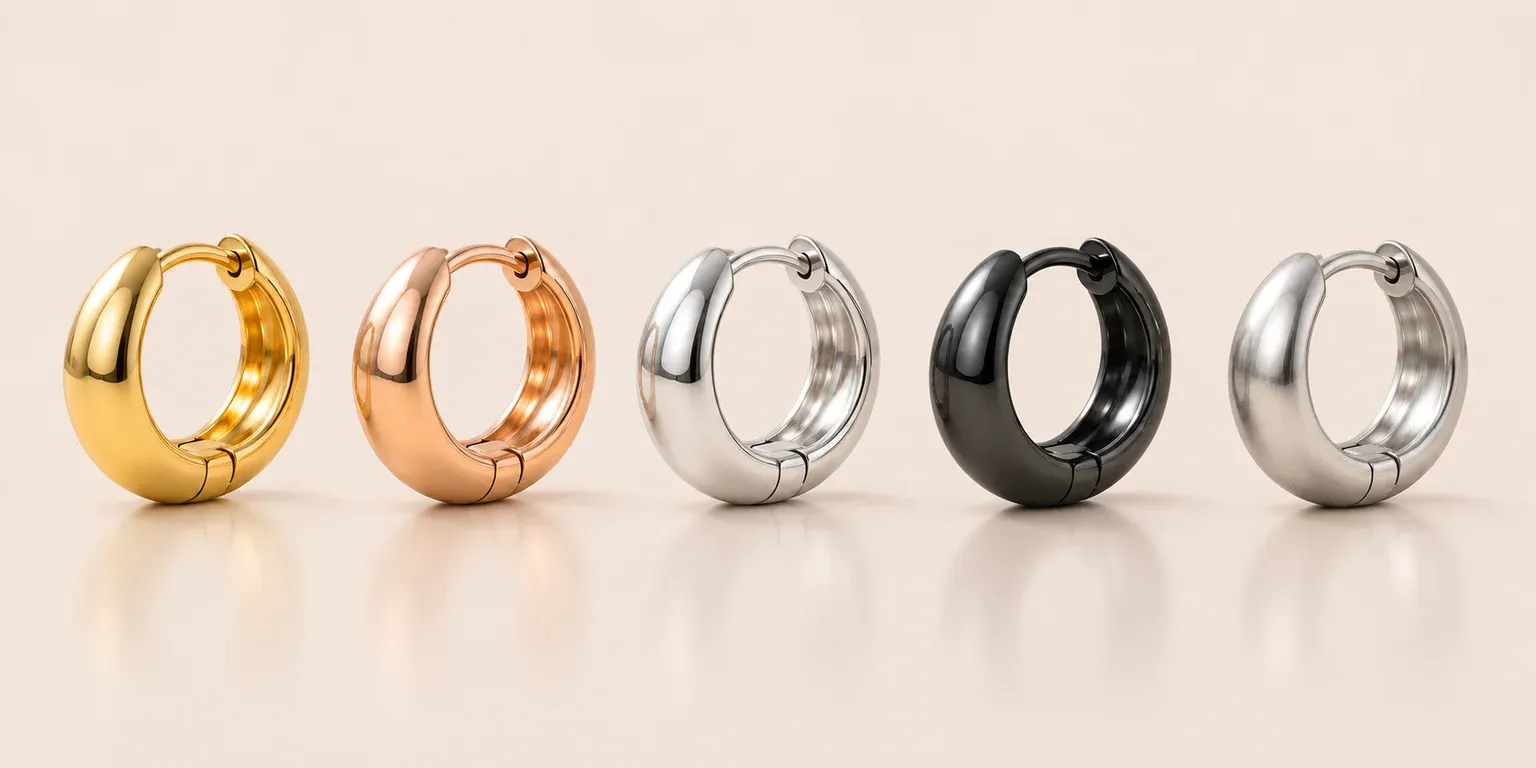
PVD (physical vapor deposition) coats the piece inside a vacuum chamber, where metal vapor deposits on the surface. The film is thin and hard and bonds tightly to the surface, but it is still a layer, and it can wear through. It is generally used on hard base metals such as stainless steel and titanium, and it is a common route to gold, rose gold and black tones on those metals.
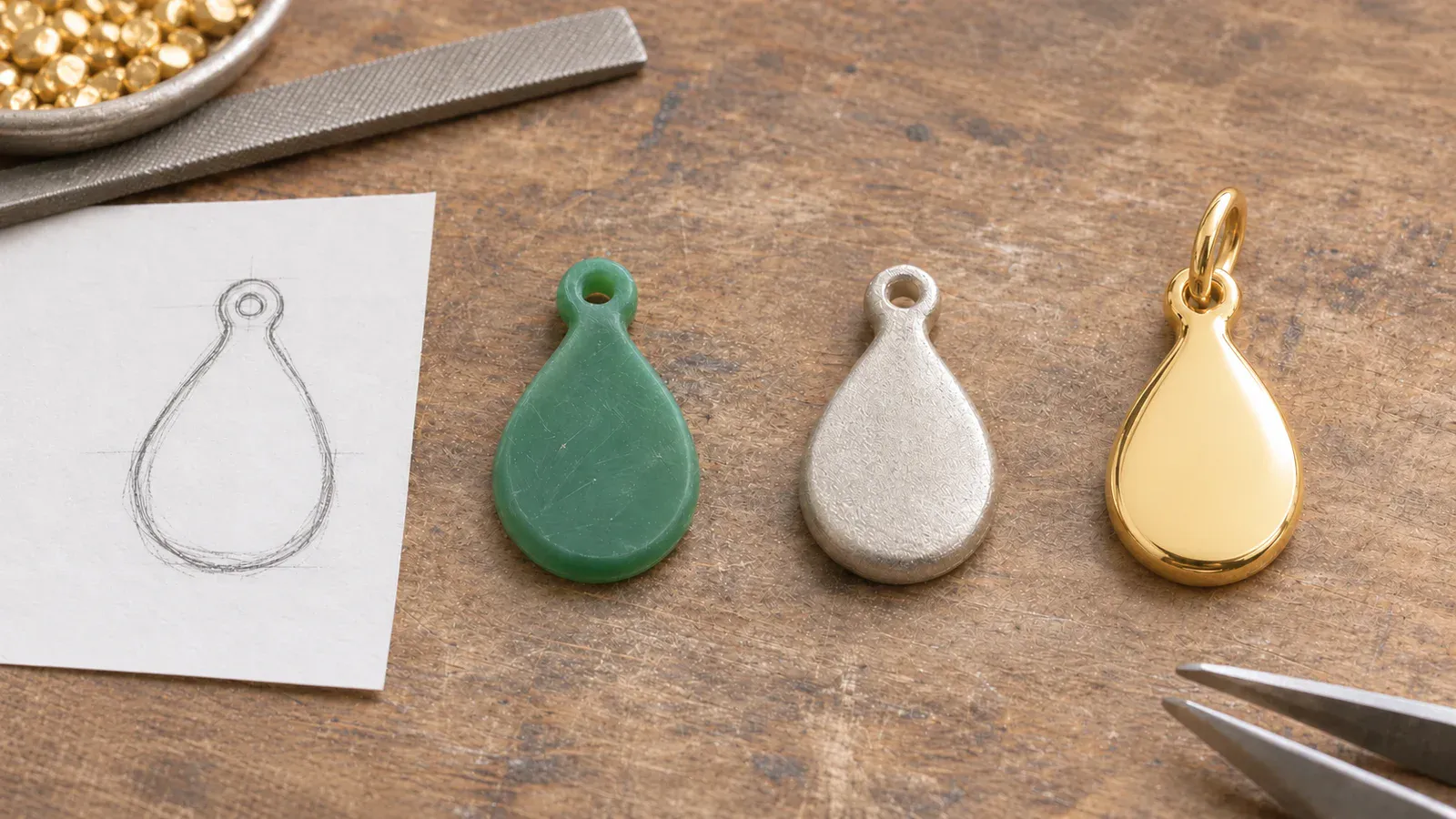
Electroplating uses an electric current to deposit gold from a solution onto a conductive base such as brass, zinc alloy or 925 silver. The piece is cleaned and polished first, because plating copies whatever surface it lands on: a scratch under the plating is still a scratch afterward. A thicker gold layer takes longer to plate and costs more, and it also lasts longer.
- Sealant
- Plated layer
- Base metal
- PVD coating
- Base metal
Which base metals suit which finish
The base metal narrows the choice before price does.
Stainless steel and titanium: PVD is the usual fit. The coating grips the hard surface well.
Brass, zinc alloy and 925 silver: electroplating is the usual route. Brass generally takes gold plating well, zinc alloy is the lowest-cost base for detailed cast pieces, and silver can be plated when a gold look is wanted.
Which process a given style gets is stated on the quote, so name the base metal and the look you want in the request.
A piece with both a plated body and a stone or enamel detail passes through more than one finishing step, so the plating plan belongs in the same conversation as the design. Rhodium plating gives silver-white pieces a bright, hard-wearing surface and sits in the same electroplating family.
Color retention: how long plated color lasts
Color life depends on thickness, on whether a clear sealant sits over the gold, and on how the piece is worn. Dry storage and occasional wear is the easy case. Daily wear in humid or sweaty conditions is the hard one. The table below shows typical ranges for each option, with the dry and the humid, sweaty figures side by side:
Read it as a planning guide. A thin layer without sealant suits fashion pieces that are meant to be replaced by next season. A heavier layer with sealant costs more per piece and is the better match for pieces that become customers' daily jewelry. Rhodium sits at the long end of the table. None of the figures are guarantees for a specific order; the quote says which option applies to your styles.
On stainless steel, PVD generally holds its color longer than standard electroplating, because the film is hard and bonds tightly. That is one reason stainless steel with PVD is a common choice for pieces worn every day.
What wears a finish down
Four things take color off a plated piece: friction, sweat, water and chemicals. Rings and bracelets take the most friction. Perfume, lotion and hairspray attack plating chemically. Chlorinated pool water and salt water do both. The care instructions you give your customers matter as much as the finish. Keep plated jewelry dry where practical. Remove it before swimming, bathing or exercise, avoid perfume and abrasive cleaners, and dry it with a soft cloth after contact with water.
Batch testing looks at the same wear points. Every batch is sampled for salt spray, artificial sweat, abrasion and nickel-release testing.
Plating quote details
Before you approve a finish, put these questions in the quote request:
The plating thickness, in microns.
How the thickness is checked. We check plating thickness on sample pieces with a thickness gauge during in-process inspection.
Which salt-spray and sweat tests apply to the finish you are ordering.
Whether reorders are plated on the same line, so the color matches your first order.
Thickness and checking method tell you more than the name of the finish. A "gold plated" piece with a very thin layer and a "gold plated" piece with a heavy layer are not the same product, and the quote should say which one you are buying.
Care notes for hangtags and inserts
Wear habits decide a lot of what happens to a finish, and buyers rarely tell their customers. Put this list on a hangtag or an insert as written:
- Put jewelry on after perfume, lotion and hairspray.
- Take it off before swimming, bathing or exercise.
- Wipe with a soft dry cloth after wearing.
- Store each piece separately in its pouch.
Next step
If the finish is the open question, send the base material and the look you want. The base material usually decides the process (electroplating for brass, zinc alloy and silver; PVD for stainless steel and titanium), and the quote then states the process, the thickness and the color-retention option.
See the finish itself on PVD and gold plating, and the base metals at stainless steel and brass.