Why the minimum changes with the route
A minimum order quantity is the smallest number of pieces of one style that makes an order worth running. What sets it is the work that has to happen before the first piece exists. Finished stock is already made, so the minimum is small. Adding your brand costs a little setup. A design that has never been made needs CAD work, a mold and a sample first, and the cost of that work is spread across the pieces in the order.
That gives three routes, each with its own minimum: in-stock, private label and OEM. The figures below are planning figures. Your quote confirms the minimum and the lead time for each style, so use the numbers to compare routes, not as a promise for a specific piece.
In-stock: test the market with small quantities
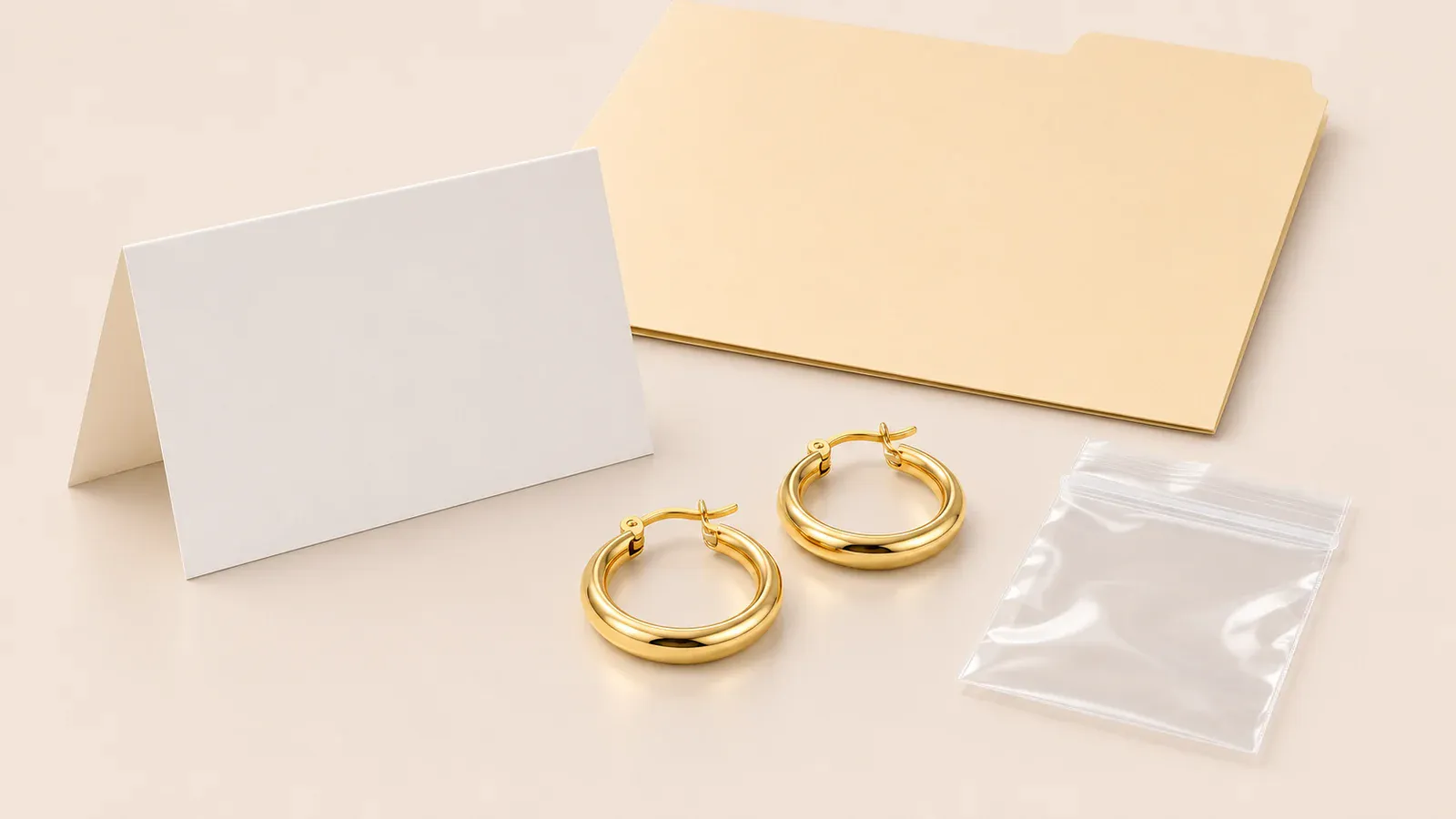
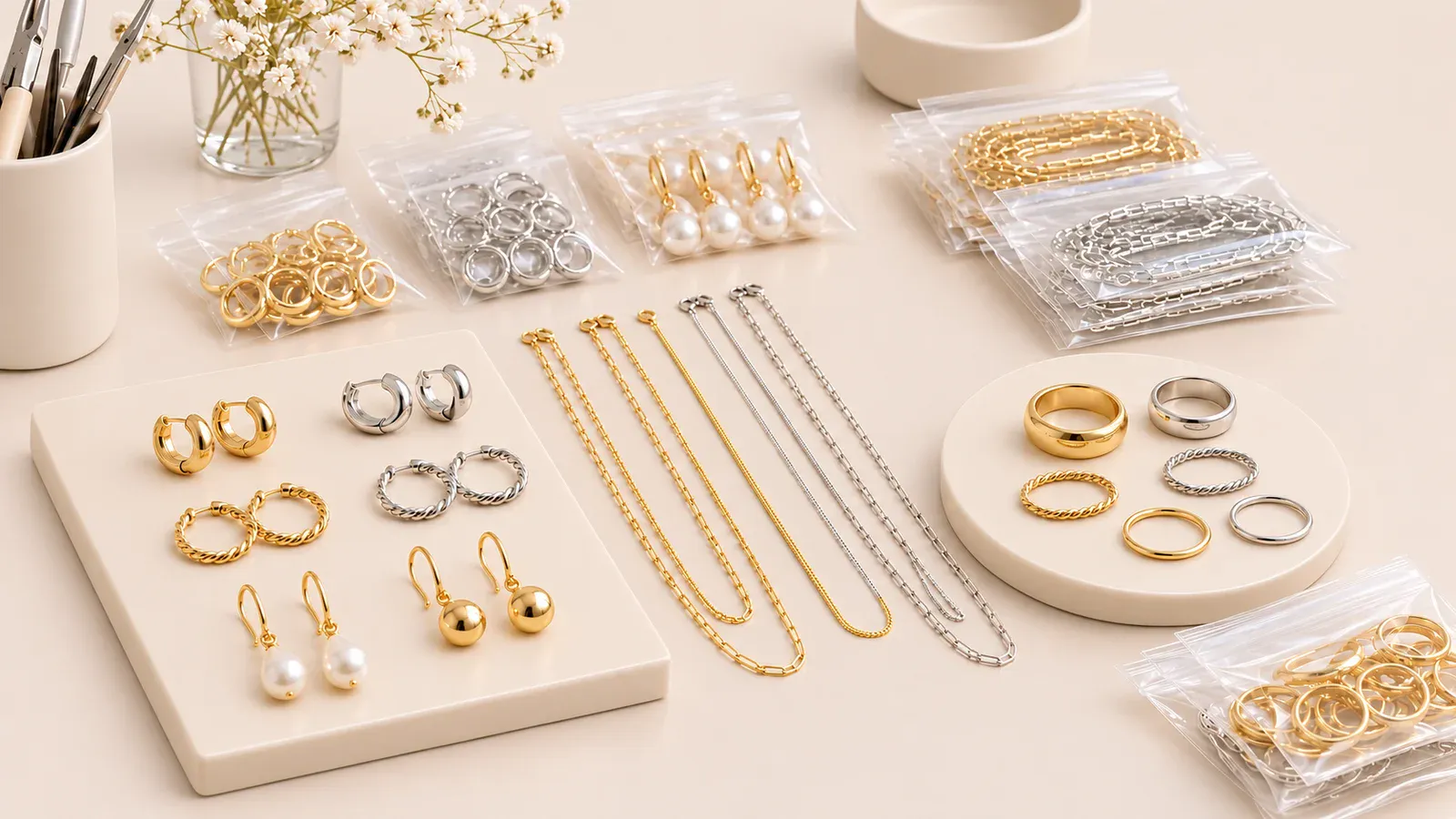
In-stock orders start at 10 pieces per style and ship in 3 days. You can mix styles in one order. In-stock orders need at least 10 pieces per style and 50 pieces in total; private-label and OEM orders need the MOQ for each style.
The mix rule is the useful part for a first order. You are not forced to buy one design in depth. You can take several styles, each at or above its own minimum, and see which ones sell. In-stock rings follow one extra rule. You can split sizes within a style, with at least 10 pcs per size.
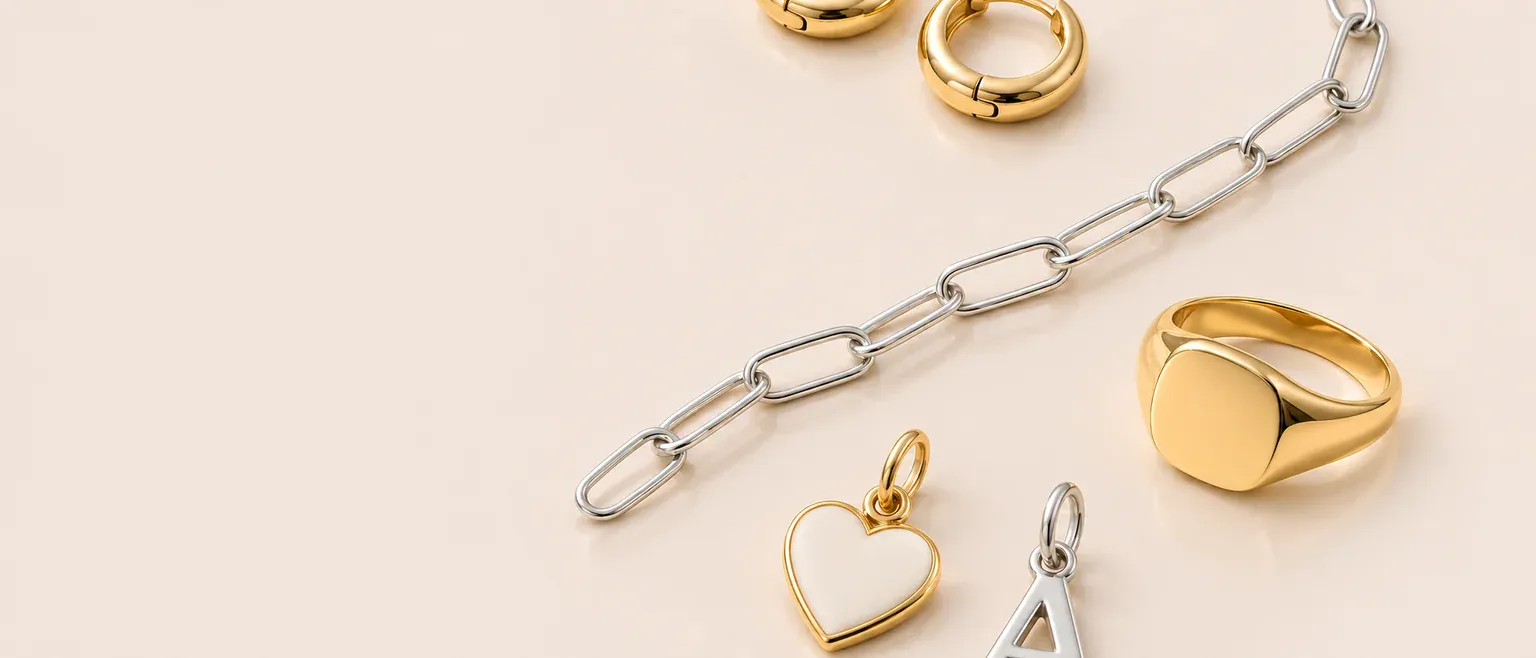
Private label: your brand on our designs
Private label means choosing ready-made styles and adding your brand, with no change to the design itself. It starts at 50 pieces per style; logo engraving starts at 30 pieces. The jewelry is the same piece as the in-stock version, so you get the lower minimum of a finished style together with a branded result.
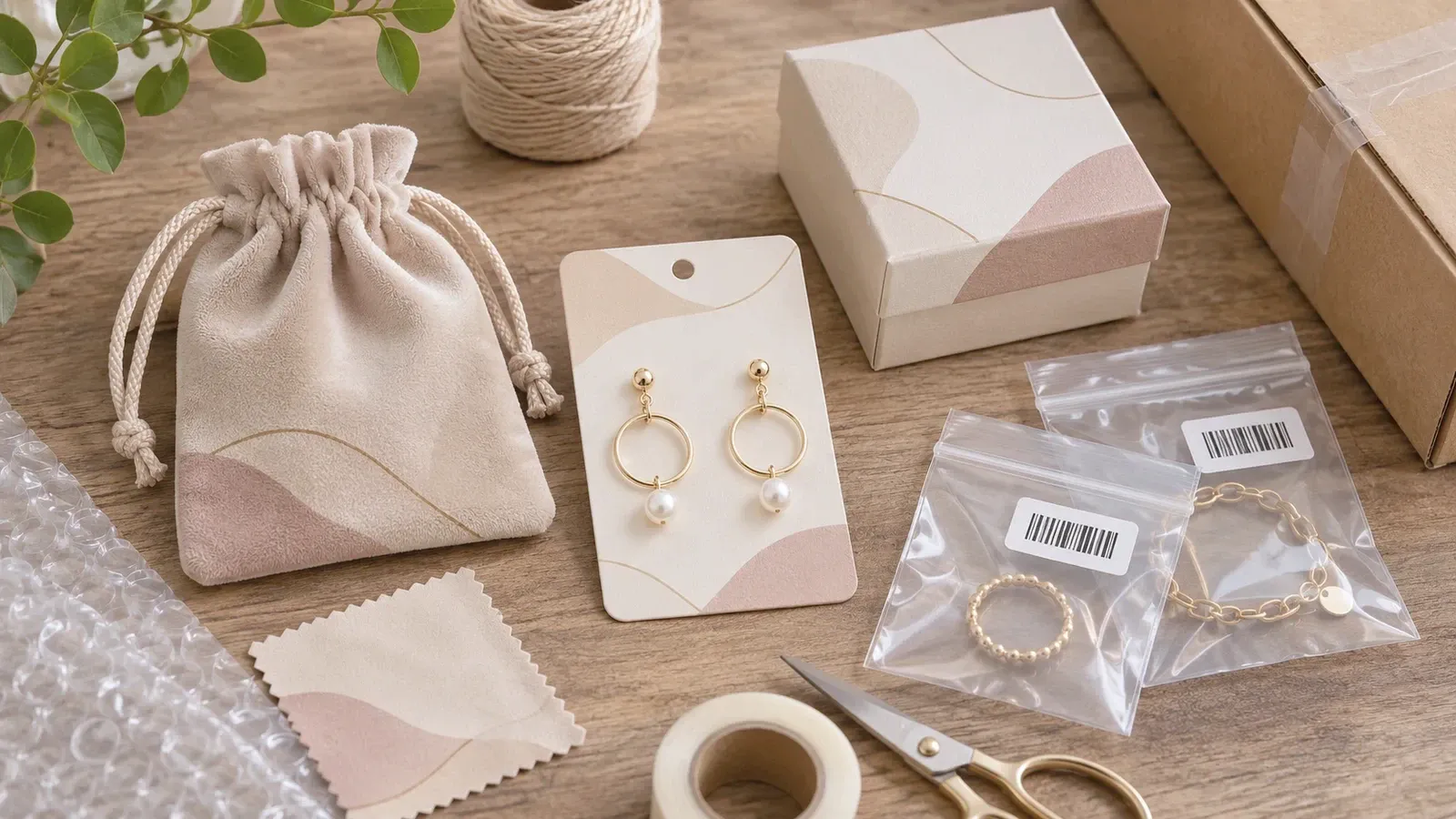
Branding can mean an engraved logo, a logo tag, a hangtag or printed packaging. Packaging has its own minimum, which the packaging checklist covers; it does not have to match the jewelry minimum. Custom chain lengths also carry their own minimum, so list the lengths you need when you ask for a quote.
OEM: your own design
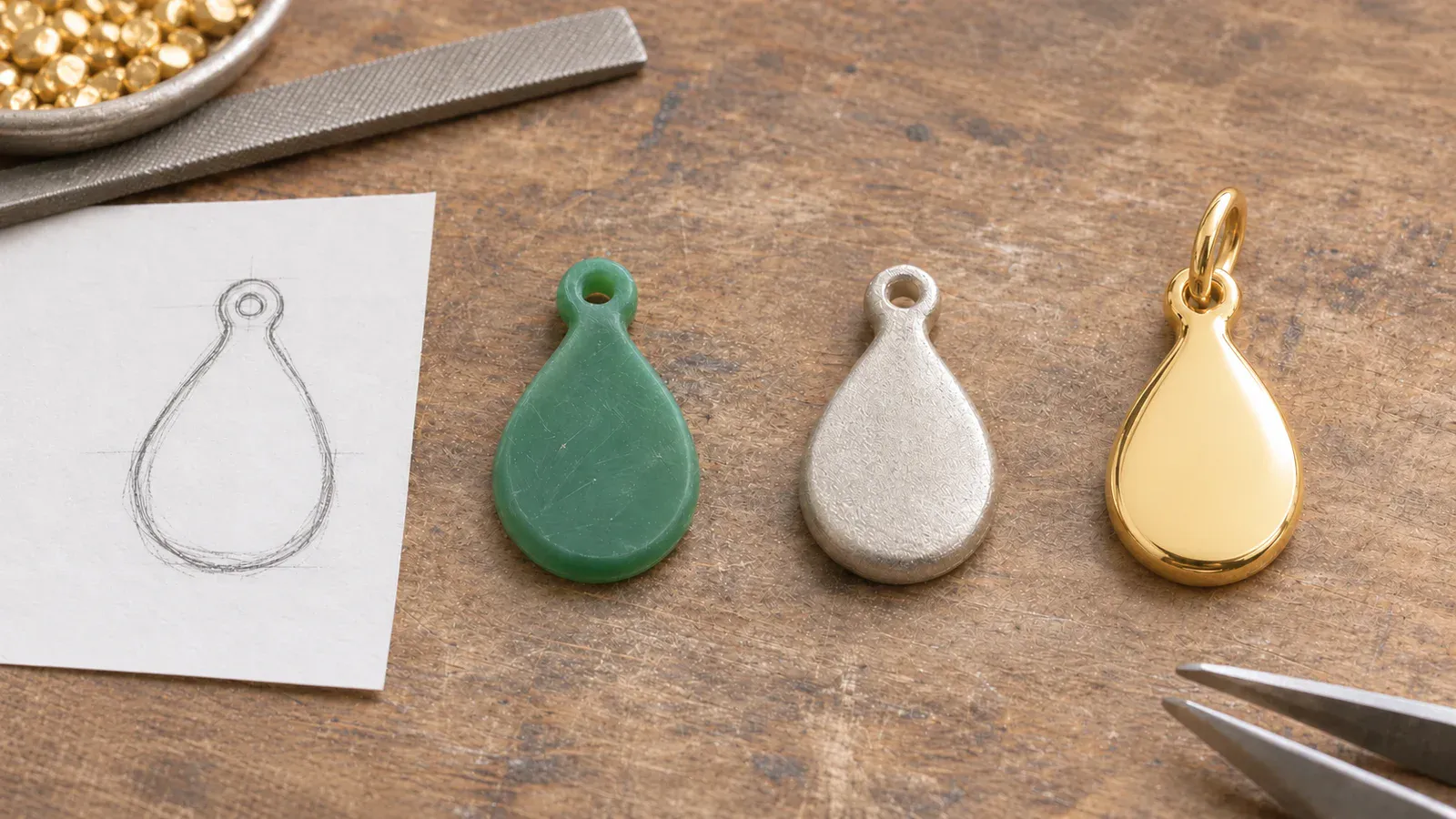
A new design needs CAD work, a mold and a sample, so each style has a minimum. It is the same for every material we make:
| Material | OEM minimum |
|---|---|
| Stainless steel | 50 pieces |
| Zinc alloy | 50 pieces |
| Brass | 50 pieces |
| Titanium | 50 pieces |
| 925 silver | 50 pieces |
Your quote confirms the minimum and the lead time for each style. Bulk production takes 30 days after sample approval. At least 30 pcs per size for new custom rings is the size rule to plan for.
New designs bring two more terms worth knowing. The path from a drawing to a sample takes 12–25 working days: CAD 2–3 working days, mold 3–12 working days, sample 7–10 working days, and the quote states the sample fee. A new design also means a mold, and what happens to that mold afterward is its own topic, covered in the custom charms guide.
Which route to start with
The routes build on each other, so most buyers do not need to pick one forever.
No sales history yet: start in stock. The minimum is small and the stock is ready to ship.
A product that sells and needs your name on it: move the best sellers to private label. The jewelry is unchanged; the brand is added.
A design nobody else sells: OEM, once the in-stock and private label tests show what your customers want.
Samples come first on every route.
| Sample | Timing |
|---|---|
| Existing style | Ships in 3 working days |
| Modified style | 5–10 working days for a new color or logo |
A sample costs far less than a wrong bulk order.
First-order quantities
Start in stock to test demand, then move your best sellers to private label.
Order samples first on every route.
State your launch date in the quote request, so the sample and bulk timing can be checked against it.
List the materials, the ring sizes and the chain lengths in your first message; each one can change a minimum.
Next step
Send the route, the styles and the quantities you have in mind. Ask the quote to state the minimum and lead time for each style, and size the first order to it. The in-stock styles are the ones ready to ship; private label and OEM have their own pages.